
 By onlinenews24seven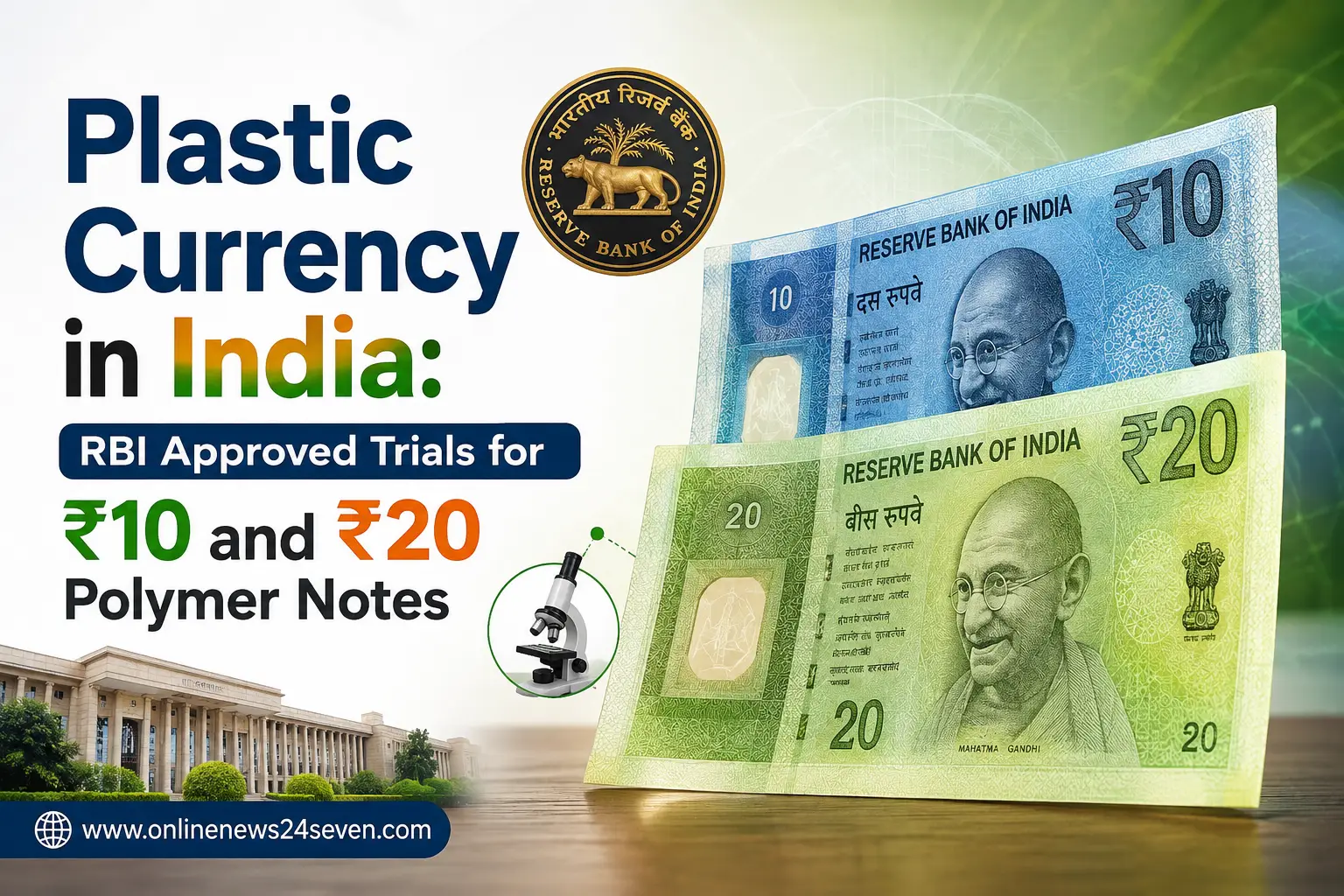
India is moving towards exploring a new form of currency as the Reserve Bank of India (RBI) receives approval to conduct trials for polymer banknotes in ₹10 and ₹20 denominations. The move marks a significant step towards evaluating whether plastic currency can improve durability, security and cost efficiency compared with traditional paper notes.
However, the approval does not mean that India is replacing paper currency immediately. The RBI will first conduct trials to study the performance and practicality of polymer notes before making any further decisions.
Government Approves RBI’s Polymer Note Trial
The Government of India has approved the RBI’s proposal to test polymer currency notes for ₹10 and ₹20 denominations. Under the trial programme, the RBI will evaluate the usage, durability and public acceptance of these notes.
The polymer notes will be introduced as part of a controlled testing process, while existing paper currency will continue to remain valid and in circulation.
What Are Polymer Notes?
Polymer notes, commonly known as plastic currency, are banknotes made from a special type of flexible plastic material instead of traditional cotton-based paper.
Several countries around the world already use polymer currency, including Australia, Canada, the United Kingdom and Singapore. These notes are designed to last longer and withstand harsh environmental conditions.
Why Is India Testing Plastic Currency?
The RBI is exploring polymer notes due to several potential advantages:
1. Longer Lifespan
Polymer notes generally last longer than paper currency because they are more resistant to:
- Water damage
- Dirt and dust
- Frequent handling
- Tearing and wear
This could reduce the need for frequent replacement of damaged notes.
2. Improved Security Features
Polymer currency can include advanced security elements that may help reduce the risk of counterfeiting.
Features may include:
- Transparent windows
- Advanced printing techniques
- Enhanced security designs
3. Better Cost Efficiency
Although polymer notes can be more expensive to produce initially, their longer lifespan may reduce replacement costs over time.
Will India Stop Using Paper Currency?
No. The RBI’s approval is only for testing polymer notes. There is currently no plan to completely replace paper currency with plastic notes.
Existing ₹10 and ₹20 paper notes will continue to be accepted as legal tender. The future of polymer currency will depend on the results of the trial and further evaluation by the RBI.
Countries Already Using Polymer Currency
Many countries have adopted polymer banknotes because of their durability and security benefits.
Examples include:
- Australia – one of the first countries to introduce complete polymer currency
- Canada – uses polymer notes across various denominations
- United Kingdom – introduced polymer versions of several banknotes
India previously explored polymer currency trials as well, including a proposal to test polymer notes in the past.
What Happens Next?
The RBI will analyse the performance of polymer notes during the trial period, including:
- Public usage experience
- Durability in Indian conditions
- Security performance
- Cost effectiveness
Based on the findings, further decisions may be taken regarding wider adoption.
Conclusion
The introduction of polymer currency trials represents an important development in India’s currency system. While plastic notes are not replacing paper currency yet, the RBI’s move shows India’s efforts to explore modern, durable and secure banking solutions.
The success of these trials could determine whether polymer notes become a regular part of India’s future currency landscape.
FAQs
Q: Is India launching plastic currency?
No. India is only conducting trials of polymer notes. A full launch has not been announced.
Q: Which Indian notes will be tested as polymer currency?
The RBI will test polymer versions of ₹10 and ₹20 notes.
Q: Are old paper ₹10 and ₹20 notes still valid?
Yes. Existing paper notes remain legal tender.
Q: Why are polymer notes better?
Polymer notes are more durable, water-resistant and can offer enhanced security features.