
 By onlinenews24seven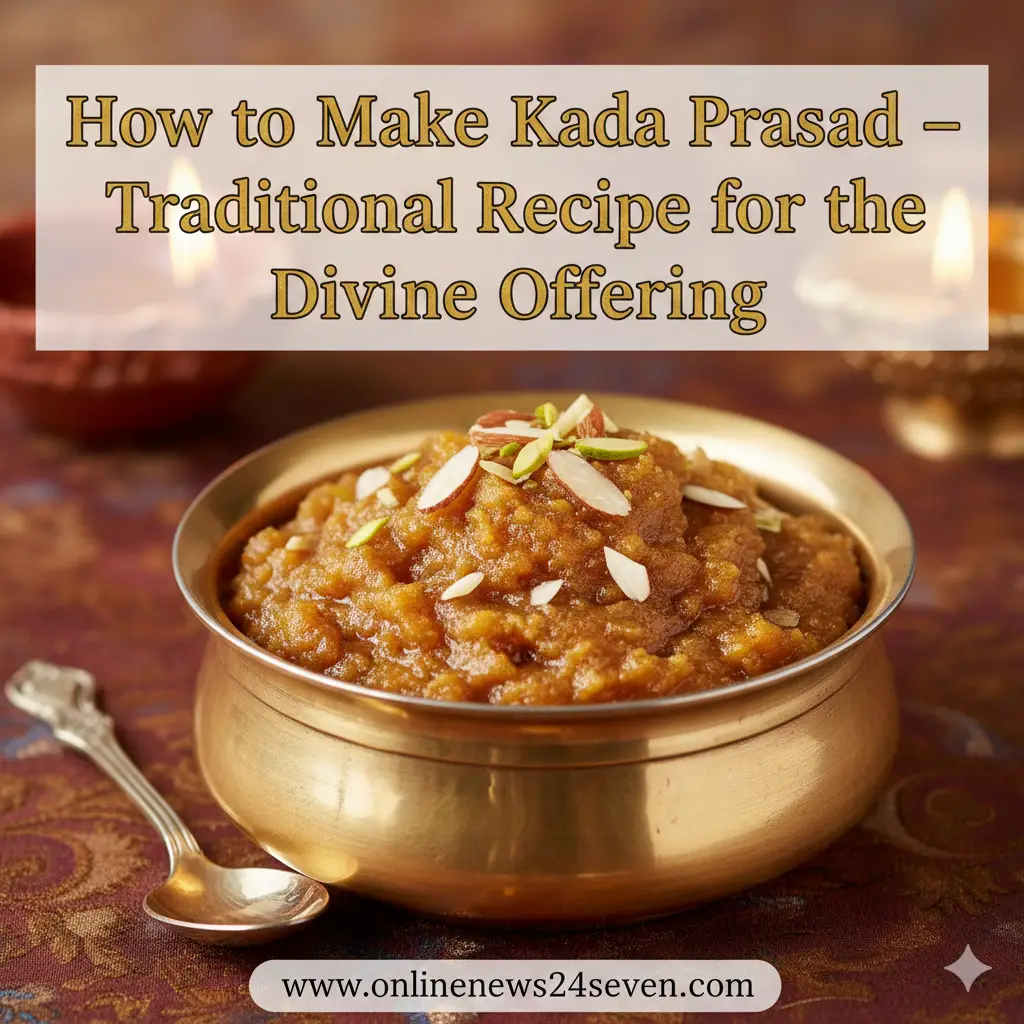
Kada Prasad is a beloved traditional sweet, commonly served as a prasad (holy offering) in Gurudwaras, particularly in the Sikh faith. With its rich, aromatic taste and smooth texture, it’s not only a divine offering but also a comforting dish to enjoy during festive seasons or whenever you’re in the mood for something indulgent. This simple yet delicious recipe consists of just a few key ingredients—flour, ghee, sugar, and water—but when made with love and patience, it results in a wonderfully satisfying dessert.
In this article, we’ll walk you through how to make Kada Prasad at home, providing you with all the necessary steps, tips, and tricks for perfect results every time.
Ingredients for Kada Prasad
- 1 cup whole wheat flour (atta)
- 1/2 cup ghee (clarified butter)
- 1/2 cup sugar
- 1 cup water
- 1/2 teaspoon cardamom powder (optional, for added flavor)
- A handful of chopped nuts (optional, for garnish)
Step-by-Step Instructions
1. Roasting the Flour
- Begin by heating a heavy-bottomed pan on medium heat. Add 1 cup of whole wheat flour to the pan.
- Stir the flour continuously to prevent it from burning and ensure it gets evenly roasted.
- Keep roasting the flour until it turns slightly golden brown and starts to release a nutty aroma. This should take around 5-7 minutes. Be patient, as roasting is the key to bringing out the rich flavor.
2. Adding Ghee
- Once the flour is roasted, add 1/2 cup of ghee to the pan.
- Mix the ghee thoroughly with the flour. Stir constantly to ensure the flour is well-coated with the ghee and the mixture becomes smooth.
- Continue roasting the flour in ghee for another 5-6 minutes, until the flour has absorbed all the ghee and the mixture is fragrant and golden.
3. Preparing the Sugar Syrup
- In a separate pan, heat 1 cup of water and add 1/2 cup of sugar.
- Stir the mixture until the sugar dissolves completely, and let it come to a gentle boil.
- You can add 1/2 teaspoon of cardamom powder to the syrup at this point for extra flavor (optional).
- Once the sugar has dissolved and the syrup is simmering, remove it from heat.
4. Mixing the Syrup with the Roasted Flour
- Slowly pour the prepared sugar syrup into the roasted flour and ghee mixture while stirring continuously.
- Be careful when adding the syrup, as the mixture may bubble and splatter.
- Keep stirring until the mixture thickens and comes together into a smooth, pudding-like consistency.
5. Final Touches
- Once the Kada Prasad has thickened and reached the desired consistency, remove it from the heat.
- You can garnish the Kada Prasad with a few chopped nuts, like almonds or cashews, for an added crunch and flavor.
6. Serving the Kada Prasad
- Traditionally, Kada Prasad is served warm as prasad during religious ceremonies or after prayer.
- It is also enjoyed as a comforting dessert or snack throughout the day.
- Serve it in small bowls and enjoy the rich, fragrant sweetness of this special dish.
Tips for Perfect Kada Prasad
- Roasting the flour properly is key to achieving the right texture and flavor. Do not rush this step, and ensure the flour is evenly roasted.
- You can adjust the sweetness of the Kada Prasad by increasing or decreasing the sugar based on your preference.
- Use good-quality ghee for the best results as it adds richness and flavor to the dish.
- For a variation, some people add a bit of saffron to the syrup for a beautiful color and subtle aroma.
Conclusion
Making Kada Prasad is a simple and heartwarming process that connects you to tradition while delivering a delicious treat. With just a few ingredients, a bit of patience, and love, you can prepare this divine prasad at home. Whether it’s for a religious offering or to share with your family and friends, Kada Prasad is sure to bring joy and sweetness to your table.
Enjoy your Kada Prasad and embrace the warmth it brings, both in taste and spirit!
Also read: Laphing Recipe: A Delicious and Spicy Tibetan Street Food