
 By onlinenews24seven
Every year on 26th January, India celebrates Republic Day to mark a turning point in the nation’s history. On this day in 1950, the Constitution of India came into effect, making India a sovereign, democratic republic. While 15th August marks independence from British rule, 26 January stands for self-rule through our own laws.
Historical Background of Republic Day
After independence in 1947, India still followed laws made under British rule. To change this, leaders and legal experts worked to create a constitution that reflected Indian values, rights, and duties. Under the guidance of Dr. B. R. Ambedkar, the Drafting Committee prepared a detailed document that laid the foundation of governance.
The date 26 January was chosen because it already held importance. In 1930, the Indian National Congress had declared Purna Swaraj (complete self-rule) on this very day. Adopting the Constitution on 26 January honored that historic demand.
What Republic Day Means for India
Republic Day represents:
- Rule of law over rule of individuals
- Equality of all citizens
- Fundamental Rights and Duties
- A government chosen by the people
It reminds citizens that power lies with the public and that the Constitution protects freedom, justice, and unity.
Republic Day Celebrations in India
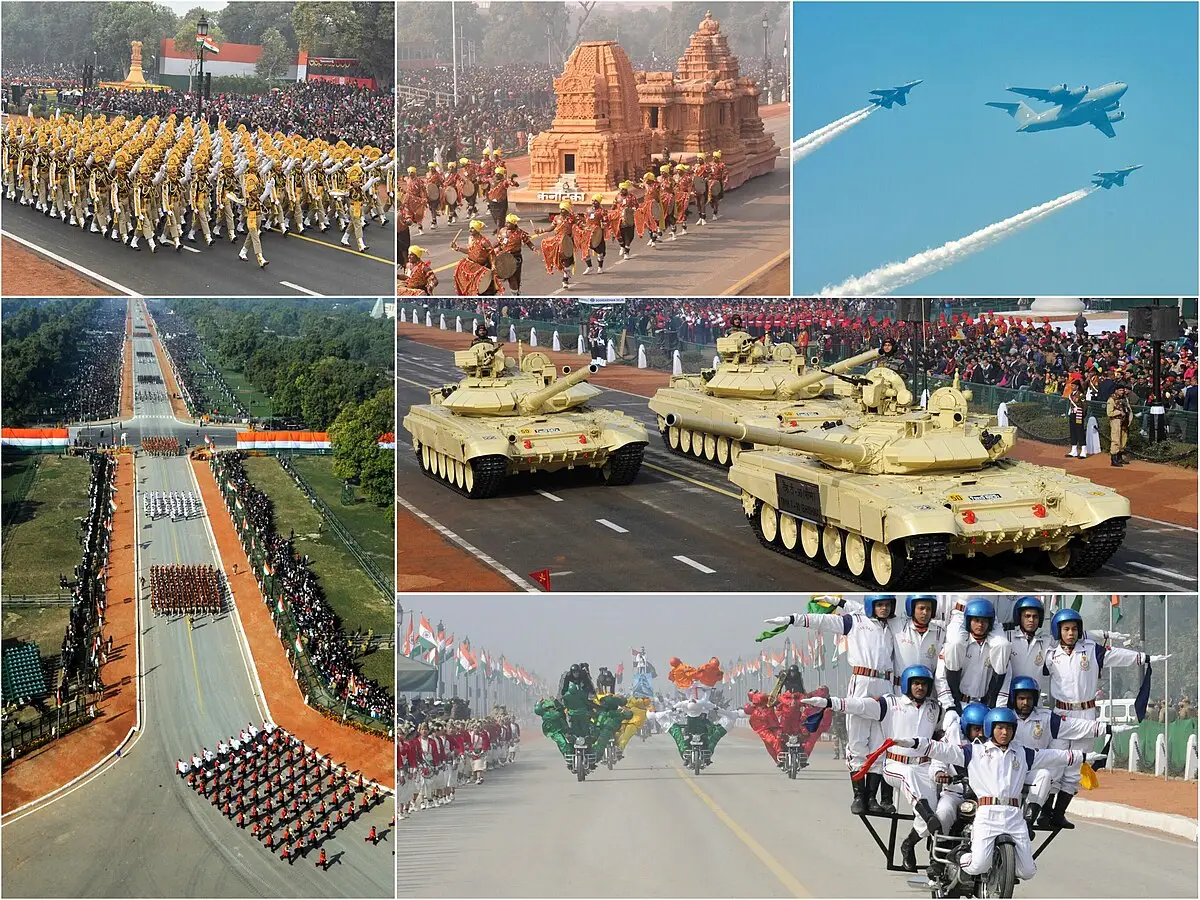
The main Republic Day celebration in India takes place in New Delhi at Kartavya Path. The event includes:
- Grand Republic Day Parade by the Armed Forces
- Tableaux from different states showing heritage and progress
- Awards for bravery and service
- Fly-past by the Indian Air Force
Across the country, schools, colleges, and offices host flag hoisting, speeches, and cultural programs. The Beating Retreat Ceremony on 29 January officially marks the end of celebrations.
Difference Between Independence Day and Republic Day
Many people ask about the difference between Independence Day and Republic Day:
- Independence Day (15 August): Freedom from British rule
- Republic Day (26 January): Adoption of the Indian Constitution
Both days are national festivals, but Republic Day focuses on constitutional values and democratic governance.
Importance of Republic Day Today
In modern times, Republic Day is not just a holiday. It is a reminder to:
- Respect the Constitution
- Perform civic duties responsibly
- Protect unity and diversity
For students, it builds awareness of rights and responsibilities. For citizens, it renews pride in being part of the world’s largest democracy.
Frequently Asked Questions (FAQs)
Q1. Why is Republic Day celebrated on 26 January?
Republic Day is celebrated on 26 January because the Indian Constitution came into force on this date in 1950, and it also honors the 1930 declaration of Purna Swaraj.
Q2. What is the importance of Republic Day in India?
The importance of Republic Day lies in the adoption of the Constitution, which defines laws, rights, and democratic values for Indian citizens.
Q3. Who drafted the Indian Constitution?
The Indian Constitution was drafted by the Constituent Assembly, with Dr. B. R. Ambedkar as the chairman of the Drafting Committee.
Q4. How is Republic Day celebrated in India?
Republic Day is celebrated with a national parade in New Delhi, cultural programs, flag hoisting, and award ceremonies across the country.
Q5. Is Republic Day a national holiday in India?
Yes, Republic Day is a national holiday observed across India every year on 26 January.