
 By onlinenews24seven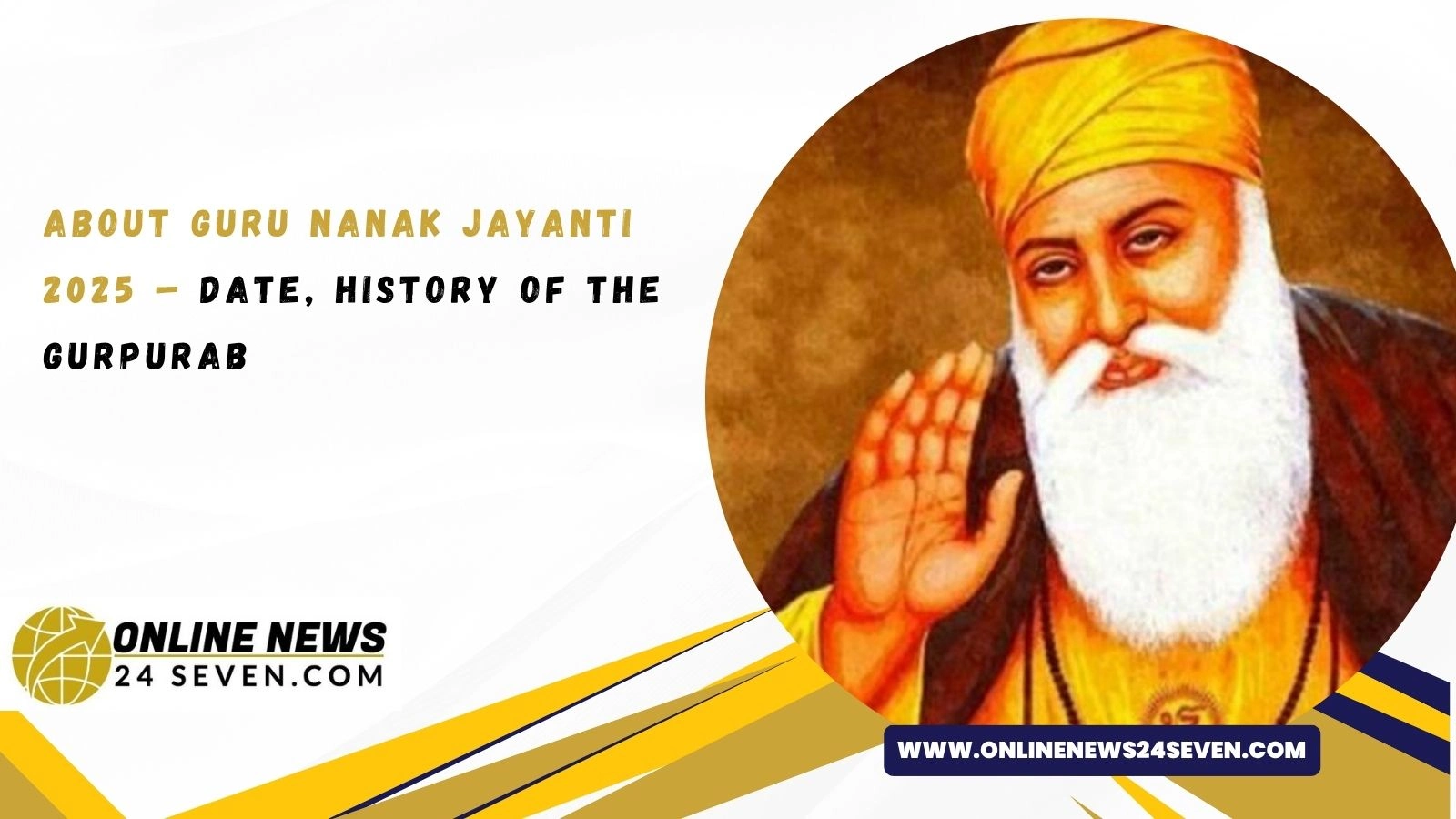
Every year, followers of Sikhism and many others join in the observance of Guru Nanak Jayanti (also called Gurpurab or Prakash Utsav), celebrating the birth anniversary of Guru Nanak Dev Ji, the founder of the Sikh faith.
Explore the Date, History & Significance of the Gurpurab
Guru Nanak Jayanti Date
In 2025, Guru Nanak Jayanti will be observed on Wednesday, 5 November.
The festival falls on the full-moon day (Purnima) of the lunar month of Kartik in the traditional calendar, which is why the date shifts each year in the Gregorian calendar.
History of Guru Nanak Dev Ji
Guru Nanak Dev Ji was born in the year 1469, in the village of Rai Bhoi di Talwandi (now Nankana Sahib in Pakistan).
Sikh tradition holds that his birth is commemorated on the full moon of Kartik (around October–November) rather than the exact Gregorian date of April 15, due to lunar calendar observances.
The observance of this festival as a public holiday and major religious celebration grew through the 19th and 20th centuries.
Significance of Gurpurab
Guru Nanak Jayanti is far more than a birthday celebration—it’s a time to reflect on the teachings of Guru Nanak and to embody them through action. Some of its key themes include:
- Equality and universal humanity: Guru Nanak taught that all human beings are equal before God, regardless of caste, creed, or gender.
- Selfless service (Seva): The tradition of Langar (community meal) exemplifies his message—sharing food without distinction.
- Devotion to One God: He emphasized that the Divine is singular and formless, beyond ritualism.
- Community and spiritual unity: The celebrations—singing of hymns (Kirtan), processions (Nagar Kirtan), and reading of the holy scripture—bring people together in communal devotion.
How Guru Nanak Jayanti Is Celebrated
On this day:
- Early in the morning, devotees gather for worship at gurdwaras (Sikh places of worship). The time around 1:20 a.m. is honoured as the birth hour of Guru Nanak.
- Hymns (Gurbani) are sung, and the continuous reading of the Guru Granth Sahib (Akhand Path) takes place.
- Processions (Nagar Kirtans) carry the Sikh flag (Nishan Sahib), and the Panj Pyare (the ‘Beloved Five’) lead the way as streets are decorated.
- Langar—free community meals—are prepared and served to all, reflecting the spirit of service and equality.
- Songs, prayers, and communal gatherings continue into the evening.
Why Guru Nanak Jayanti ji Matters
For many, Guru Nanak Jayanti is a time to reflect on timeless values that transcend religious boundaries: compassion, service, truth, and unity. The world may be complex and divided, but the message here is one of connection and dignity. It invites each of us to ask: How can I serve my community? How can I treat others as equals? How can I live with humility and integrity?
Frequently Asked Questions (FAQs)
Q1. When is Guru Nanak Jayanti in 2025?
A: Guru Nanak Jayanti will be celebrated on Wednesday, 5 November 2025.
Q2. Is Guru Nanak Jayanti a bank holiday in India?
A: Yes, Guru Nanak Jayanti is a gazetted public holiday in India, which means most banks, schools, and government offices remain closed in states where it is officially observed—especially in Punjab, Haryana, Delhi, and Chandigarh. However, in some states, only central government institutions may close.
Q3. Why is Guru Nanak Jayanti also called Gurpurab?
A: The term Gurpurab combines “Guru” (teacher) and “Purab” (festival), meaning a festival dedicated to a Guru’s birth anniversary. Guru Nanak’s birthday is one of the most prominent Gurpurabs in Sikhism.
Q4. What are the main rituals performed during Guru Nanak Jayanti?
A: The key rituals include the Akhand Path (continuous recitation of the Guru Granth Sahib), Nagar Kirtan processions, Kirtan Darbars (hymn-singing gatherings), and Langar (community meals).
Q5. What is the message of Guru Nanak Dev Ji?
A: Guru Nanak Dev Ji emphasized oneness of God, equality among humans, honest living, and selfless service. His teachings are preserved in the Guru Granth Sahib, the central holy scripture of Sikhism